

The era of buying a tablet for text-to-speech features might soon be over, as researchers have now designed a foldable, inkjet-printed carbon nanotube (CNT)-based thermoacoustic loudspeaker that works on paper, literally. This upcoming loudspeaker promises to revolutionize audio systems by packaging flexibility, toughness, and superior acoustic quality, all in an ultralight, ultracompact package. As described in the Advanced Functional Materials journal, this new technology can potentially revolutionize flexible electronics and wearable technologies in the future.
A Promise In The Making
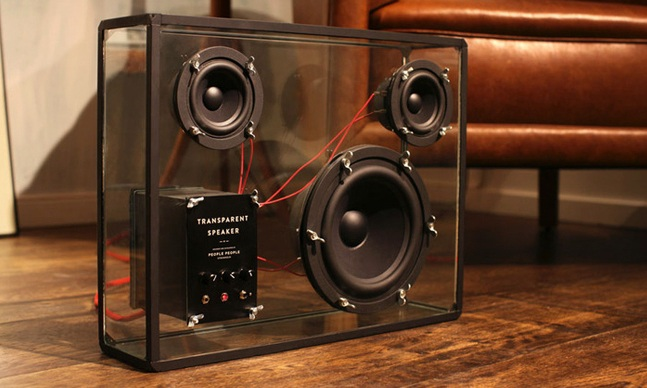
Conventional loudspeakers, though functioning at the highest industry standards, are forced to rely on complicated electromechanical systems that increase their size with increasing quality. As quality increases, the systems are forced to employ bigger magnets and coils, making them bulky and less conformable. This leaves them disadvantaged in flexibility and compatibility, meaning that smaller devices cannot make use of high-quality sound systems.
The newly developed devices, referred to as the TA loudspeakers, attempt to solve this problem by redefining how we create sound altogether. TA loudspeakers do not employ mechanical vibrations to generate sound and instead make use of heat. As an electric current passes through the printed carbon nanotubes (CNTs), heat is released into the surroundings, leading to the vibration of air molecules, which produces sound waves.
Since there are no moving parts, TA speakers can be very thin and flexible and therefore ideal for embedding into flexible electronics. The speakers can also withstand significant mechanical deformation such as bending or folding, without compromising sound quality. Even under repeated mechanical stress, the speakers are still capable of producing clean, smooth sound across a wide range of frequency, up to 20 kHz.
Manufacturing Endless Possibilities
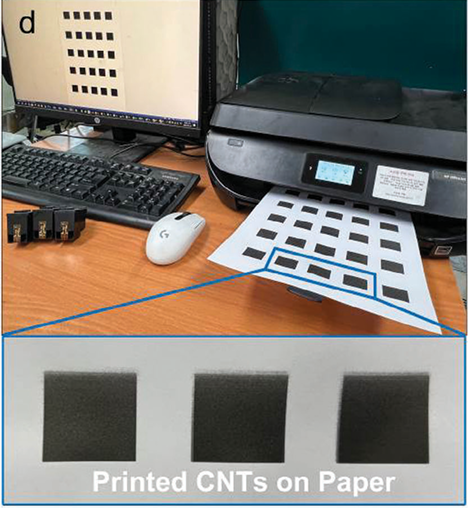
Perhaps the most interesting aspect about these speakers is how they are being produced using inkjet printing technology. The CNT ink that is used for the printing process is made by dispersing the CNTs in deionized water, allowing the material to be printed smoothly without clogging the printer nozzles. As an added bonus, the paper substrate not only enhances the mechanical strength of the loudspeaker but also contributes to its better acoustic properties, allowing the CNTs to produce high sound pressure levels (SPL) comparable to commercial earphones.
The inkjet printing process is a scalable and cost-effective way by which carbon nanotubes (CNTs) can be uniformly placed on materials such as paper. The process of manufacturing is also versatile and usable on commercially available printers, allowing the process to be utilized for large-scale mass production. This technique also enjoys a significant advantage over other traditional fabrication methods, in that it reduces the need for complex processes that could end up damaging the flexible substrate.
The 3D folding architecture of these loudspeakers allows the speakers to be easily shaped and folded into various configurations. During a demo, the loudspeakers were folded into the shape of an origami bird while playing music, managing to be consistent in their sound output despite being mechanically deformed. This level of flexibility is particularly useful in products that need to save space or alter form.
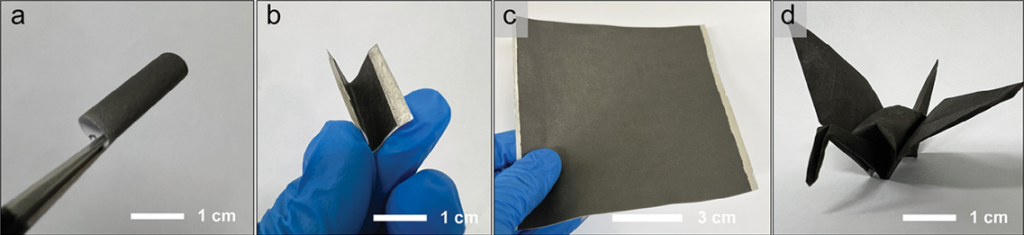
The TA loudspeakers also underwent rigorous folding and bending tests in harsh conditions, such as repeated bending and folding cycles, and managed to emerge unscathed with a consistent output of sound. The loudspeakers only registered small differences in sound pressure levels after 1000 bending cycles and over 2000 folding cycles, thus proving their durability and long-term reliability. Even after constant use for 1000 minutes, the speakers were still functional with no extreme loss in sound quality.
The Future of Sound
While promising, there are still issues to overcome in fully commercializing the technology. For instance, while capable of producing good sound, they are still deficient in output as compared to standard systems, especially at low frequency levels. Research and development are ongoing to advance their efficiency, acoustic range, and compatibility with advanced electronic systems.
If these technologies become scalable for mass production, they can revolutionize consumer electronics overnight. From how we listen to audio in wearables to making more efficient and smaller sound systems possible, the foldable thermoacoustic loudspeaker can reshape the future of flexible electronics irreversibly. With research continuing, this technology can provide an economical and sustainable solution for future sound systems.