
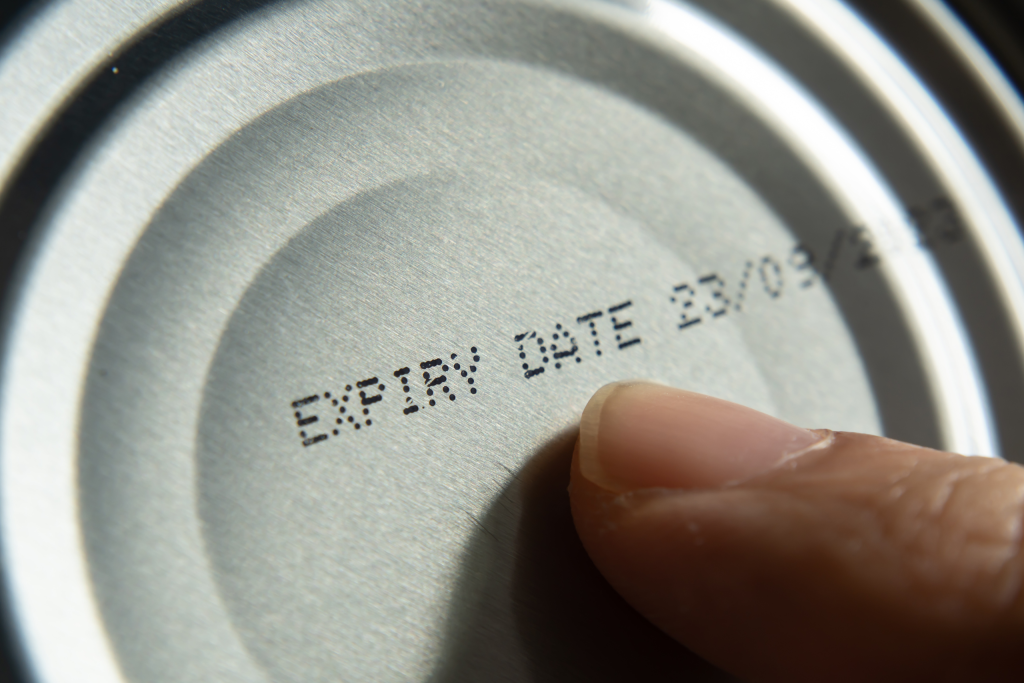
Expiration dates – The first thing everyone looks for when shopping, and the last thing everyone looks at before chucking something right into the garbage. According to a New York times article, 43% of people reported that they toss out products that are close to or past their expiration dates. With so many folks basing their diets around them, I think it is important to ask: How do expiration dates even work?
Let’s start off by establishing the different types of “dates” a person might encounter while shopping at a grocery store. One type is obviously expiration dates, which can also sometimes be labeled as “use-by.” These tell you when a food item might be unsafe for consumption. However, this is not the only phrase that shoppers encounter when looking for the shelf life of a product. Some other common phrases that are often seen include: “Best by” and “sell-by.” Though both of these just sound like synonyms for an expiration date, they are not indicative of the safety of the food but rather the quality, letting consumers know when to consume the food by for its peak quality.
As a matter of fact, under US Federal law established in the 1980s, only baby formula is required to have an expiration date on it. This means that any other product with a date is self-regulated. For one company, a best-by date could mean an expiration date, but for another it could just signify how long the product remains fresh. There is no federal or state standard for what dates are required to be on a product, and what these dates should signify. This essentially gives people no choice but to treat all the dates as expiration dates and throw out potentially good food for fear of it being unhealthy.
Though its beginnings had good intentions, the way it is being enforced, or the lack thereof, means that “expiration” dates cause chaos among consumers and massive food waste.
So what are we doing about it?
Well, nothing.
To truly address this issue, Congress would have to pass a law enacting new guidelines for expiration dates. Though there have been multiple pieces of legislation put forth to define expiration dates, most recently the Food Date Labeling Act of 2023, none have passed and the latest effort has still yet to be voted on, despite its introduction two years ago. In the wake of Congress’ inaction, the California legislature passed Bill 660, which defines “Best if Used By” as a measure for peak quality, while “use by” will serve as the indicator for when the product is no longer safe.
California’s precedent in establishing clear cut guidelines has sparked other states to introduce similar legislation to address consumer concerns. New Jersey, Illinois, Massachusetts, and South Carolina are all working on their own versions of the California Assembly Bill 660.
Why has Congress failed to act?
With all these states acting on the problem with ease, it begs the question as to why Congress could not do the same? Everyone grasps that congress is very partisan and politically polarized, but for an issue which has broad bipartisan support not to be tackled just goes to show the extent of congress’ ineffectiveness. The chamber’s inability to pass even the most common-sense legislation puts on full display how gridlocked the halls of congress have truly become.
Despite Congress’ failure, California’s success might set a golden standard, as manufacturers who plan on selling their goods in California will be expected to follow their guidelines for dating food. If that organization also does business outside of California, they are more than likely to just use California’s standard everywhere they do business for ease of production. Though this will not encompass every brand, it will set a consensus, and maybe even prompt congress to codify California’s guidelines into federal law.