
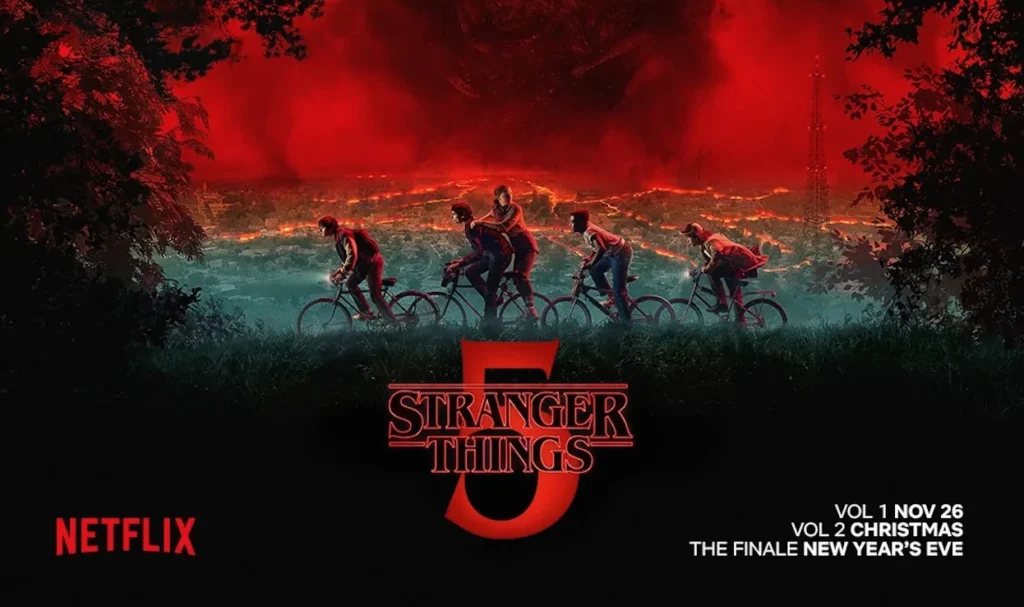
The most recent buzz in the film industry that has had everyone in conflict is the final season of the award-winning Netflix original series Stranger Things.
The Final Season
The fictional world of Hawkins, Indiana plagued by the paranormal forces of the Upside Down has been a staple in television and has brought together fans from around the world. The series began in 2016, and each season consistently has been one of the most anticipated releases on Netflix. The show follows a group of teenagers as they engage with an alternate realm of nightmares that keeps reappearing in their small town.
Upon release, the show was an instant hit among viewers and grew a dedicated fanbase with remarkable speed. Many attribute the show’s success to its unique setting and nostalgic vibe, a refreshing story different than what many are used to.
However, the recent release of season five has divided the fanbase, even pushing people out of it entirely. Season five received the lowest Rotten Tomatoes score out of all seasons (roughly 83%) and the lowest Metacritic score of all seasons (71 out of 100). While the consensus has been that the season was enjoyable, there has been outrage across the fandom.
Reasons for the outrage
Numerous fans argue that the final saga of the Stranger Things series did not live up to the promises and hype they had expected. With three and a half years of preparation, the world awaited to be amazed by the final installment. A large argument in the case against Stranger Things is that it was poorly written. The lack of stakes, an excess of exposition, and the wrong turn for the decade-long series.
Another major point of contention lies in the handling of the show’s core characters. While Stranger Things has always balanced a large ensemble cast, many fans feel season five struggled to give meaningful conclusions to everyone involved. Characters who were once central to the emotional weight of the series were either sidelined or resolved too quickly, leaving some story arcs feeling rushed or incomplete. For a show praised for its character-driven storytelling, this shift disappointed viewers who had grown attached over nearly a decade.
Pacing also emerged as a common criticism. Several episodes leaned heavily on extended dialogue and exposition rather than organic storytelling, slowing the momentum during what was supposed to be the most intense chapter of the series. While earlier seasons used mystery and suspense to draw viewers in, season five often explained its threats rather than allowing them to unfold naturally. This approach reduced tension and made the stakes feel less urgent, even during climactic moments.
Critics vs. Fans
From a glance, it would seem that the final season was generally accepted by the world. This is not the case based on ratings, however. Reports show that critic ratings and fanbase ratings were the most divided in the show’s history regarding the 5th season. The question of the legitimacy and relevance of critic ratings has come into question as people argue with what “certified” reviews claim.
Despite the backlash, the season was not without praise. Visually, Stranger Things remained impressive, delivering cinematic-scale action sequences, polished special effects, and a darker tone that aligned with the series’ evolution. The production design and soundtrack continued to honor the show’s 1980s roots, which many fans still regard as one of its strongest elements. Performances from the cast, particularly the original core group, were also widely commended for their emotional range and commitment to their roles.
The divide between critics and longtime fans highlights a broader discussion about how television finales are judged. Critics often evaluate seasons based on structure, themes, and technical execution, while fans place greater emphasis on emotional payoff and narrative closure. In the case of Stranger Things, critics largely viewed season five as a solid conclusion, while portions of the fanbase felt it failed to deliver the catharsis they had been building toward since 2016.
Ultimately, Stranger Things season five stands as a controversial yet significant conclusion to one of Netflix’s most influential series. Whether viewed as a satisfying finale or a missed opportunity, its impact on pop culture and television storytelling remains undeniable. The debate surrounding its ending only reinforces how deeply the show resonated with audiences—and how difficult it is to meet expectations when a series becomes more than just entertainment.