

It’s no secret that electric vehicles have come a long way in the last decade. They’re quieter, cleaner, and increasingly more capable than their gas chugging counterparts. Despite all the progress, there are two major concerns that dissuade consumers: range anxiety and slow charging. You can maybe make peace with one or the other, but both at once? That’s still a hard sell for a lot of people.
But a new kind of battery innovation might change that. It doesn’t involve a new motor or a faster charging cable, instead focusing on something much simpler and, oddly enough, often overlooked: the electrolyte.
A recent review published in Advanced Energy Materials explores a relatively new type of electrolyte called a Weakly Solvating Electrolyte, or WSE. At first glance, this might sound like a niche tweak or just another lab trick aimed at boosting sales but it’s much more than that.
Why Electrolytes Even Matter
In every lithium battery, from your phone to your car, the electrolyte is the substance that lets lithium ions move between the battery’s electrodes. It’s what makes charging and discharging possible. Although most of the headlines focus on cathodes and anodes, it turns out that the electrolyte can make or break battery performance in more ways than one.
Traditionally, electrolytes have been designed to strongly coordinate lithium ions, helping them dissolve and move around. Although this sounds good in theory, it creates new limitations that hinder the battery’s performance. Strong solvation means those ions are harder to strip away when they need to move quickly, like during fast charging. It also means more side reactions, faster battery wear, and worse stability at higher voltages.
WSEs counter these limitations by binding loosely to the lithium ions, resulting in Faster lithium transport, smoother plating, and stronger, more stable protective layers at the electrode surfaces. As an added benefit, WSEs manage all of these upgrades without being exotic, toxic or unscalable.
Faster Charging, Longer Range, and (Hopefully) Less Stress
Now, let’s talk range.
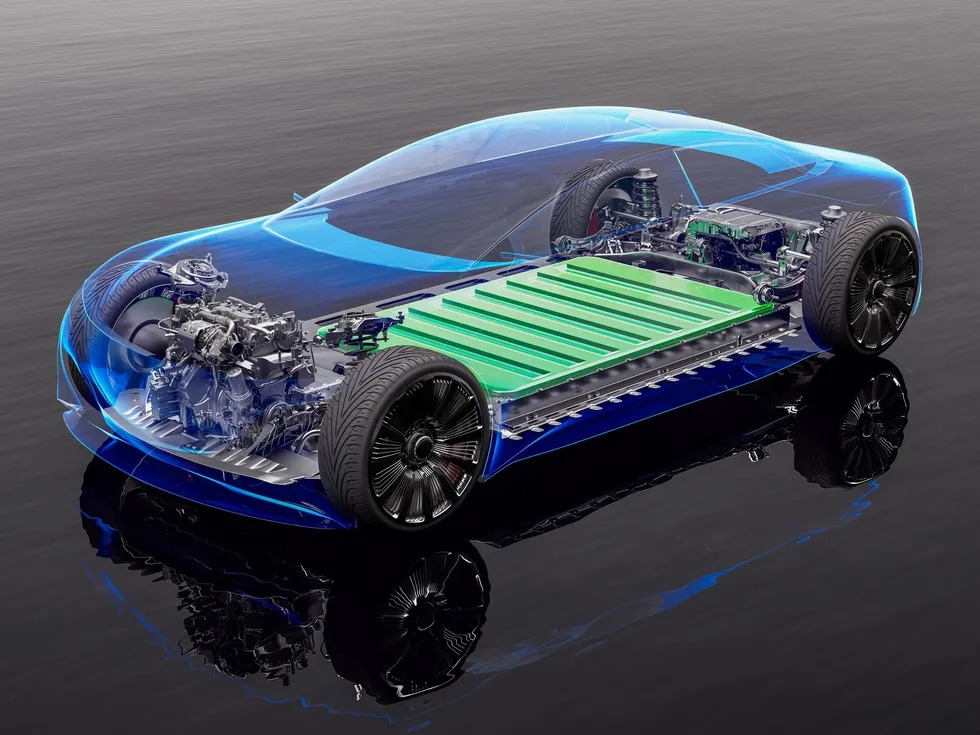
One of the main roadblocks to getting more mileage out of EVs is the limited energy density of today’s batteries. In plain terms, they just don’t hold enough juice. But WSEs open the door to using lithium metal anodes, which can store much more energy than the graphite ones we use now. More lithium packed into the same space? That means more range – potentially hundreds of extra miles per charge.
Then there’s charging.
With WSEs, lithium ions can reach the anode faster and settle more evenly, reducing the risk of dangerous buildup and allowing higher currents. That could make 15-minute full charges a real possibility, not just a marketing promise.
As expected, WSEs come with a few tradeoffs. Some have lower ionic conductivity while others are tricky to formulate. Further, the perfect balance between performance, cost, and safety hasn’t quite been nailed down yet.
Scaling up the formula is yet another hurdle to be crossed before we see this innovation come to life. Designing the right solvents, making them in bulk, ensuring they’re compatible with existing production lines will take significant time and resources.
If WSEs live up to their potential, they could finally crack open the high-energy, fast-charging, long-lifespan trifecta that EV engineers have been chasing for years. And not just for luxury sedans. This could apply to grid storage, delivery vans, or even next-gen aircraft batteries.
So What Does This Mean for the Rest of Us?
It means that, someday, you may not have to choose between fast charging and long range. You might not have to plan your entire weekend road trip around charging stations or pray that your EV handles the winter chill without draining halfway through the drive.
And yes, that change might come from something as deceptively small as the electrolyte.
For now, it’s still a lab story. A review of the progress and the promise. But history is full of small details that ended up changing everything. The silicon wafer. The double helix. Even lithium-ion itself once seemed like a niche curiosity. We rarely see the big shifts coming – not until they’ve already reshaped the landscape.
Because sometimes, solving the big problems doesn’t take a big leap. Just the right push, in the right place.