
Prochargers, turbochargers and superchargers are all types of forced induction that allow the user to get more power out of a smaller engine. These can all greatly improve engine performance and speed.
How it works:
Forced induction is when a device such as those listed above is used to push more air into the combustion engine of a vehicle, allowing for more powerful crankshaft rotations and quicker induction into the cylinders. These “chargers” also cool the air using an intercooler (usually in between the intake/charger and the engine), allowing for more are in the allotted space because it is in turn denser. This means that the larger amounts of air forced into the cylinders allow for a larger explosion, increasing the overall speed and power of each cylinder’s fire.
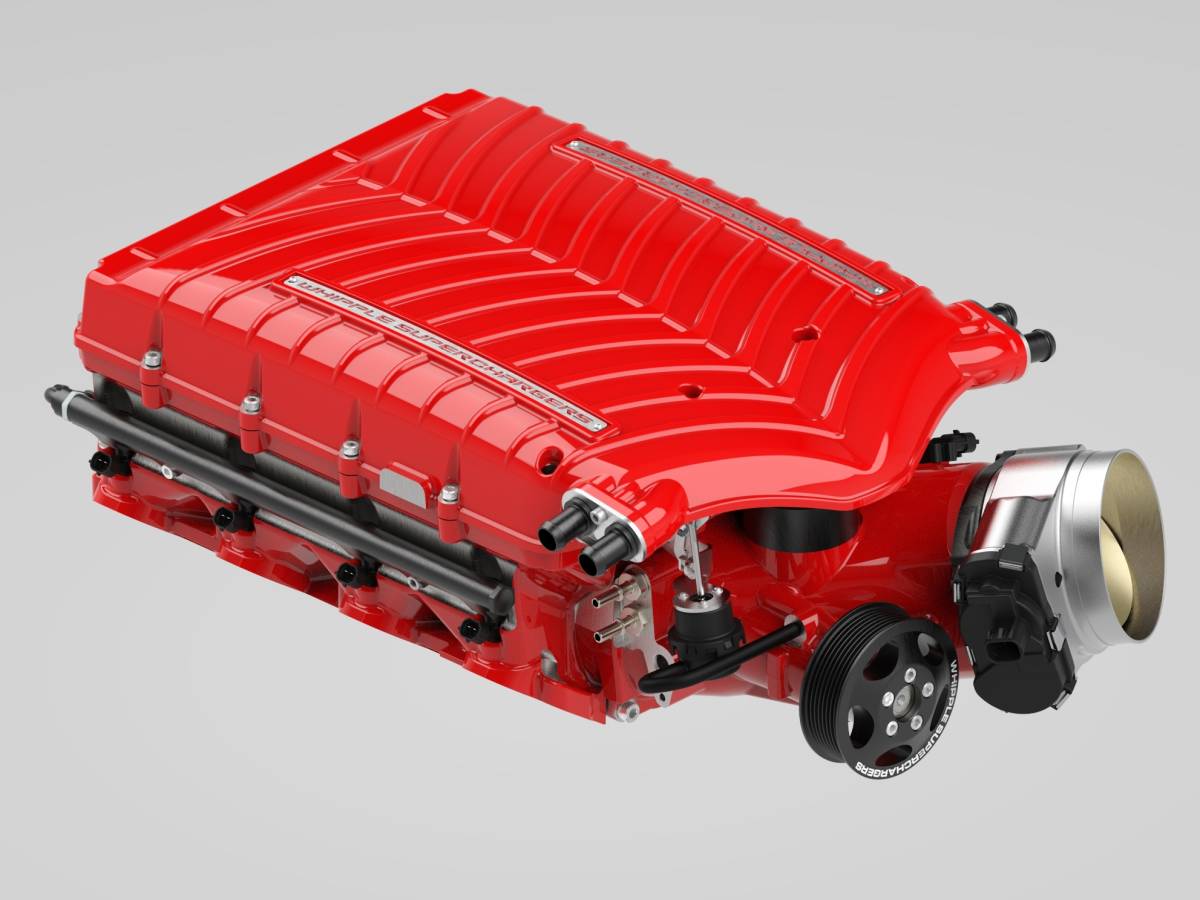
Superchargers:
A supercharger install allows for a 30-50% horsepower increase depending on the engine and base horsepower. A supercharger provides instantaneous boost because of its connection to the engine’s crankshaft through a system of pulleys. This boost is consistent throughout the rpm range, which is important for immediate response scenarios such as drag racing. A supercharger works by the connection to the crankshaft which in turn makes the inner turbines spin, compressing air from above and bringing it into itself, causing it to be forced into the engine through the intercooler. Often times superchargers will be used in engines with at least 8 cylinders.
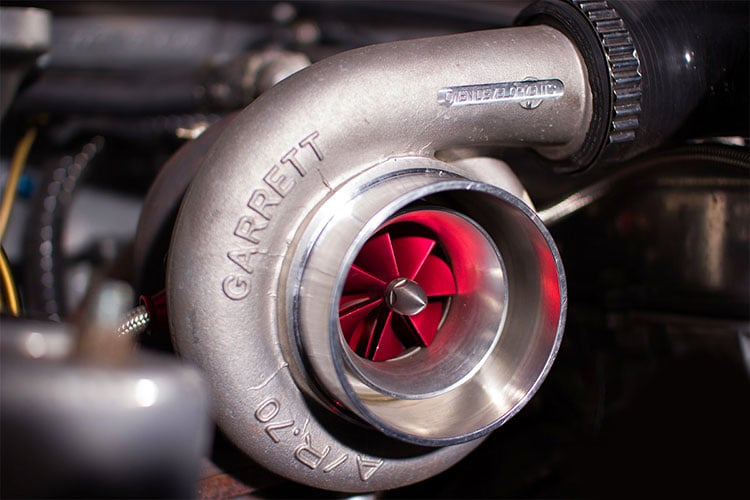
Turbochargers:
A turbocharger install can increase horsepower by 35-60%, depending on engine setup and tuning. Unlike a supercharger, a turbo relies on exhaust gases to spin its turbine, which then powers a compressor that forces air into the engine. Because it depends on exhaust flow, boost builds progressively with engine speed—this is known as turbo lag. However, once spooled, a turbo can deliver significant high-end power. The compressed air is typically routed through an intercooler before entering the intake manifold, increasing air density and improving combustion efficiency. Turbochargers are often favored in performance builds where top-end power is the priority. Often times turbos will be used in engines with less than 8 cylinders.
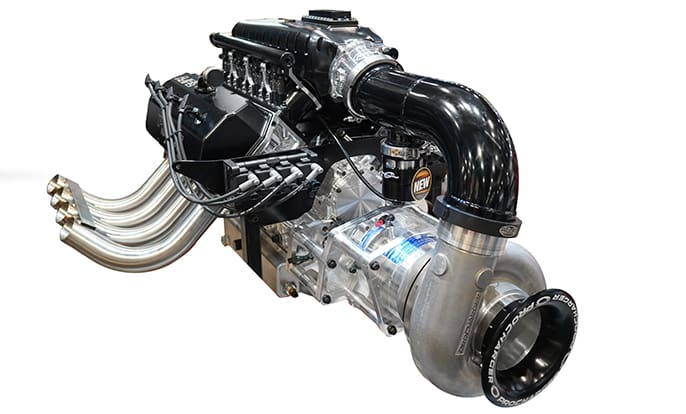
Pro Chargers:
A Pro Charger, a type of centrifugal supercharger, offers a 40-75% horsepower gain depending on the build. It uses a belt-driven impeller, like a supercharger, but operates more like a turbo in how it delivers power—boost builds with RPM. This makes it ideal for high-revving street and strip applications. The compressed air flows through an intercooler before reaching the engine, helping keep intake temps down and power consistent. Pro Chargers are known for combining the reliability of superchargers with the high-end performance characteristics of turbos. Often times Pro Chargers will be used in engines with 8 cylinders.
Advantages and disadvantages of each:
While they all provide a large improvement in boost and speed, a turbocharger is usually the most efficient in terms of fuel and is usually used for lower budget and smaller engine builds. On the opposite side, while giving less overall fuel economy and reliability, the super and Pro Chargers allow for instant boost, which is why they are often preferred in engines with 6-8 cylinders. Turbo lag due to using the exhaust from the vehicle gives them a lower boost at lower rpms, which is why they aren’t as common in drag racing and other events where instantaneous power is necessary. Overall, the use of any of these is mostly based on preferences, the desired outcome, and the specific vehicle that it is being applied to.
The Cost:
Turbocharger:
- Kit Cost: $2,000 – $6,000
- Installation: $1,000 – $3,500
- Total Typical Cost: $3,000 – $9,500
- Notes: Cost depends on single vs twin turbo, custom vs bolt-on kits, and whether supporting mods (fuel system, ECU, internals) are needed. Custom fabrication for non-factory turbos adds to cost.
Supercharger (Roots or Twin-Screw):
- Kit Cost: $4,000 – $7,500
- Installation: $1,000 – $2,500
- Total Typical Cost: $5,000 – $10,000
- Notes: More straightforward installs on V8s like Mustangs, Camaros, and Challengers. Roots and twin-screw systems are usually more expensive due to hardware size and torque potential.
Pro Charger (Centrifugal Supercharger):
- Kit Cost: $5,000 – $8,500
- Installation: $1,500 – $3,000
- Total Typical Cost: $6,500 – $11,500
- Notes: Pro Chargers often require custom tuning and upgraded fuel systems. These are popular in drag builds and require more precise setups for max benefit.
Overall, the different boost methods are important if you want to add speed and functionality to your car, and any of the 3 main chargers can give you the desired power depending on your vehicle type.