
How to Change a Tire:
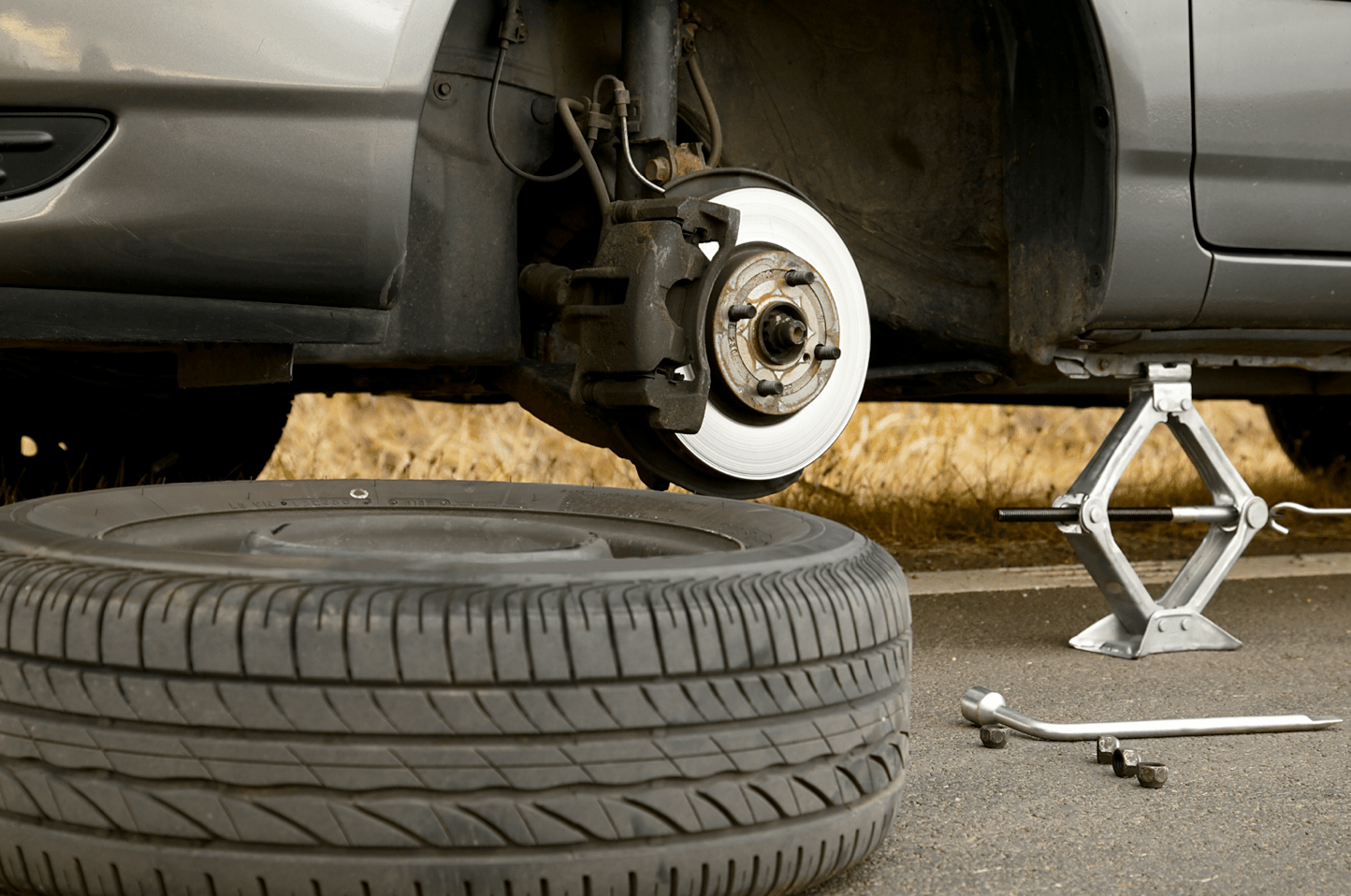
While changing a tire is quite simple, it is also something that many people don’t understand how to do. Changing a tire could save you in an emergency situation, as well as save you a trip to a mechanic. In order to change a tire, you must first:
- Grab your spare tire from either the back of the car or other location (many will have one under a panel in the trunk of a car).
- Take a jack and put it under the support beams of the car (see the car’s manual for correct placement to avoid damage). Make sure you have the parking brake on and put stoppers in front of the wheels if necessary. Once it is in the correct position, use it to lift the car and lock it in place.
- Once the wheel is fully lifted you can then loosen the bolts. After all bolts are loosened, remove them one by one and then pull the wheel back to remove it from the vehicle.
- Now you can take your new or temporary tire and push it onto the hub. Line up the holes of the wheel with the holes on the hub and then put in the bolts in a crosshatch pattern and hand tighten. Make sure to go back after hand tightening and use a torque wrench (or normal handheld), to tighten the bolts firmly.
- You can now lower the car with the jack (usually there is a release that smoothly lowers it) and remove the jack from under the vehicle.
Extra tip: After you have driven the car for a short trip, take your wrench and re-tighten the bolts to make sure they are secure.
How to do an oil change:
- Determine if you need a full oil change- Look online or in your car’s manual to find how often you need to change the filter (it is usually listed in both miles and months, make sure to change when the first one happens). If you have verified that you need to do a full change, you can now start the oil change process.
- Gather your materials- In order to get the right materials for your car there are many resources available online and in person. AutoZone is my recommendation, as you can add your vehicle and look for the parts for your specific car. Once you have added your car on the website, look for an oil filter as well as motor oil and an oil drain pan (if you don’t have a properly sized funnel make sure to get one at the same time to save yourself an extra trip).
- Starting the oil change (removing the old oil)- Once you have determined that you need a full oil change and have the materials it is time to get started. Jack your car up as necessary using the steps described in the tire change module and bring your new filter and drain pan under the car. Once you have the pan properly placed under the sump, you can now remove the oil drain plug and let the old oil drain.
- Next take the old oil filter off and flip it upside down in your container. You can now grab the new filter, take some old oil and lubricate the seal of the new filter, and screw it into the hole. Furthermore, take the drain plug, wipe it off with a paper towel, and screw it back in place.
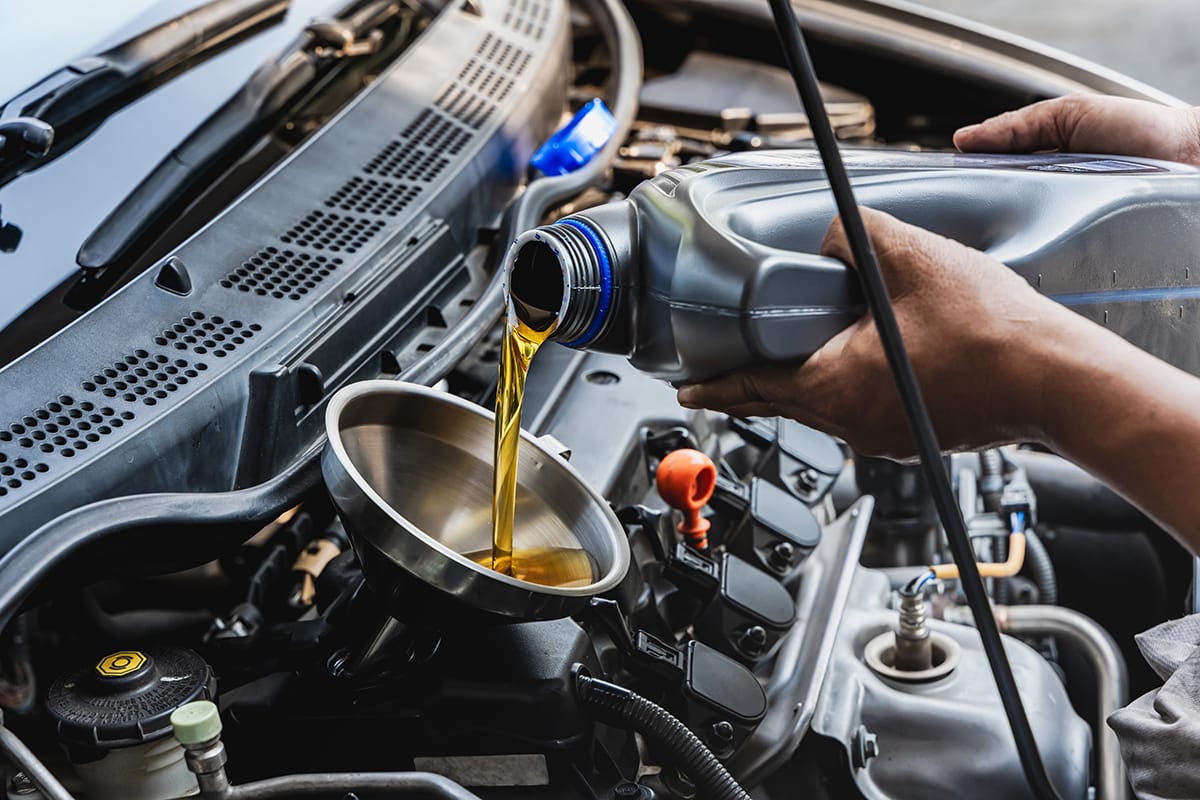
- Since you have completed the underside of the change, you can now go into the hood of the car and unscrew the oil cap, insert the funnel, and pour the new oil into the vehicle.
- Finally, you can check the oil levels, add more as needed, and start the engine to check for leaks.
How to jump a car battery:
- To jump a car, you will simply need jumper cables and 2 cars (or a charger meant for jumping cars).
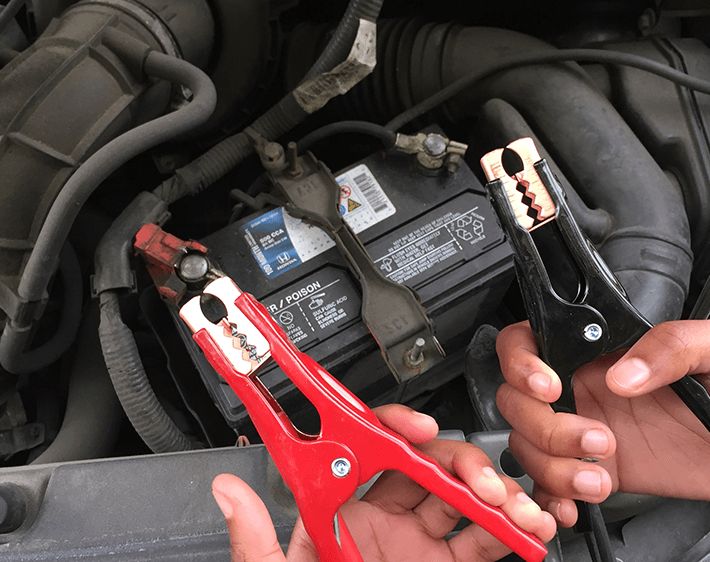
- First connect the red cable to the red part of the battery on the dead car, then connect the other end of the red cable to the live battery.
- Now you can connect one end of the black cable to the black part of the live battery, and then after the black cable to the black part of the dead battery (you can also use grounds instead of the black part of a battery).
- Next start the car with the live battery and let it run for about 10 minutes.
- Finally, once the battery has been charged, you can start the other car (many people will tell you to turn off the live vehicle before trying to start the dead car).
WARNING: do not let the wires touch ends while connecting them to the car battery, this could lead to injury. Also do not start either car until the cables are properly connected and make sure to keep your hands clear.
While professionals have allowed people to avoid doing a majority of car maintenance, some things are essential especially for emergency situations. While these are only a couple, I believe they are the most essential, as well as easy to learn.